2014/12/15

23.1. Tribute in Memory of Lawrence .R. Klein: Professor Klein in Spain 1981-2013

    Meeting of Project Link in Salamanca (Spain) in year 1994. Professor Lawrence R. Klein 
(3rd from the left)  and several Spanish Professors of Applied Economics: Josefa Fernandez-Arufe
 to this left,   J.Bernardo Pena-Trapero (to the left of Josefa), Antonio Pulido and Adolfo Castilla
 (5th and 6th from the lefft at the 1st fow) and other international participants in the meeting.


                            Actualización de 20-10-2025

Tribute in memory of Professor Lawrence R. Klein, Honorary Presidente of the Euro-American Association of Economic Development Studies

Nobel Prize: The biography of Lawrence Robert Klein appears at the Nobel Prize Website: He was born in Omaha(N.E. USA) on 14th September of 1920, and died on 20th October 2013 in Gladwyne, PA, USA. They remark the profound impact of the Great Depression on this priority for Economic Models and Policies to prevent crises:
"His growing up under the Great Depression had a profound impact on his professional career. Klein went on to study at the University of California in Berkley before earning his Ph.D. in economics at the Massachusetts Institute of Technology in 1944. He worked at several universities in the US, and resided in the UK for a few years. Klein also worked as chief economic advisor to Jimmy Carter during his 1976 presidential campaign".


Memories


Memories at the Euro-American Association of Economic Development Studies: We express our heartfelt condolences for the passing of Professor Lawrence R. Klein at the age of 92 on 10th Octoboer of 2013. We wish to show our gratitude to Professor L.R. Klein, who has honoured our Euro-American Association  by accepting to be Honorary President of the Advisory Board of our journal international journal Aplied Econometrcis and International Development (AEID), published by our Euro-American Association of Economic Development Studies (EAADS), until his deeply felt death on 10th October of year 2013. We include, in this Entry of our Blog, a reference to the friends and links of Professor Klein in Spain for the period 1981-2013, in the Sections: Profesor Klein in Spain and Our meetings with L.R. Klein.
More information about the 25th Anniversary of the Euro-American Association of Economic Development Studies, at Entry 63 or this Blog, including photo of L.R. Klein with members of the Association at Santiago de Compostela.

Condolences by Director of Project Link: In an article in Spanish, by Andrea Larios-Vazquez (2014): Lawrence Robert Klein, 1920-2013,  in Vol. 2014. Núm. 388. of Elsevier Informa, in Mexico, this author indicates that Peter Pauly Director of Project Link, declared_

“But for all of us he was, of course, the Founding Father of Project Link, its creator and life-long supporter. It is particularly poignant to lose him at a time when so many of us are gathered in New York for our annual meeting at the United Nations. For all of us, he was a friend and generous mentor. Many were his colleagues or students, and we all are in awe of his lifetime achievements. He was unfailingly supportive, kind, and engaged. The project would not exist with out him, and many of us owe their careers to his mentorship. Our thoughts go out to his wife Sonia, his children and many grandchildren. We will send our deepest condolences on behalf of the entire Link family”.

Obituary in the journal Empirical Economics.


Professor Klein in Spain. 

L.R. Klein and the UAM, Madrid: There has been an important relationship of Professor Klein with Professor Antonio Pulido at the University Autonomous of Madrid (UAM) for many years, where he was Doctor Honoris Causa, a high distinction, in year 1981 and the university created a Research Institute on this tribute (The L.R. Klein Institute at the UAM, Madrid). 
Interesting Information and photos of the relationship of L.R. Klein with the UAM: Article written by Professor Jose Vicens at the  Website of history of the UAM Faculty of Economics

Profesor Jose Vicens states: ".... the genesis of the institute began in the 1977-78 academic year, when Professor Adolfo Castilla, a personal friend of the later Nobel Prize winner in economics and honorary doctor of the UAM, Professor Lawrence R. Klein, proposed to our group the development of an econometric model for Spain, in the manner and form in which the models were developed at WEFA (Wharton Econometric Forecasting Associates)".


L.R. Klein and the Congress of ASEPELT in Barcelona, 1986: Professors Pulido and Pena, organized, together with other economists interested, the creation of the Association of Applied Economics ASEPELT Spain, and invited to Professor L.R. Klein to the foundation Congress in Barcelona in year 1986. 

L.R. Klein in A Coruña and Santiago de Compostela, 1986:

    From left to write; Kenneth  Galbraith, Gonzalo Ortiz, Lawrence R.Klein, Enrique Marfany, 
    and  Maria-Carmen Guisán, First Congress of Economists of Galicia, A Coruña 1986.

 L.R. Klein (4th from the left) with members of FEUGA (Foundation of University and Enterprises, and with Professors Maria-Carmen Guisan and Adolfo Castilla t(o the right), Santiago de Compostela, 1986

L.R. Klein in Salamanca, 1994: In year 1994 the Project Link meeting was held in Salamanca, and Professor Klein was the leader of the meeting. It was a very interesting meeting with participants from many countries. Here are some photographs of the meeting. The meeting was organized by the Regional Government of Castilla y León. 


  The complete pictures of the Project Link meeting 1994 at Salamanca (Spain): Lawrence R.Klein and economists from all over the World. Among Spanish economists there are several teachers from the universities UAM and UAH (Madrid), UVA (Valladolid), USC (Santiago de Compostela) and UDC (A Coruña)
               
L.R. Klein with Econometrics team in Santiago de Compostela, Spain), 2004: Professor Klein has been a great support to the international journal AEID (Applied Econometrics and International Development), published by the Euro-American Association of Economic Development Studies, which is included in the prestigious Index Scopus of Elsevier, and other outstanding indexes, with a high position at the downloads ranking of Ideas.Repec (both by total downloads and by downloads per item). He has colaborated as an author, publishing and article on India and China, in year 2004, and also as Honorary President of the Advisory Council of AEID from 2001 until his deeply felt death in year 2013.

    Professor Lawrence R. Klein and his wife Sonia Klein, in year 2004, with teachers
    and students of the Master ESI of International Sectoral Economics (USC), 
   Photo at  the Obradoiro Square of the city of Santiago de Compostela (Spain).

Other visits of L.R. Klein to Spain: Professor L.R. has colaborated as Member of the Comittee of Economics Prizes of the the Foundation King James I of Castellñn (Spain), and has visited Valladolid in the celebration of the Statistical Office of the region of Castilla y Leon in year 2005.

Our meetings with L.R. Klein (by the President of the Euro-American Associatio (EAAEDES) , Professor Maria-Carmen Guisan : 
"We have had several opportunities to meet Professor L.R. Klein in Spain: 1) At the Congress of Economists of Galicia in year 1986, in the city of A Coruña, 2) in his visit to the University of Santiago de Compostela in the save year, at the First Congress of the Applied Economics Association ASEPELT in Barcelona in the same year, 4) at the Project Link Meeting in year 1994 at Salamanca. 5) Since year 2000 we have met him, and his wife Sonia, in their travel to the city of Santiago de Compostela of year 2004, where they had a meeting with members of our Euro-American Associationf of Economic Development Studies and with students of our international Master on Economics. For the periodo 2001-2013, s Honorary President of our journal AEID, he has been a great support to the journal."
In Entry 63 of this Blog we celebrate the "25th Anniversary of the Euro-American Association of Economic Development Stuides", with our gratitude to the great support received from Professor L.R. Klein, and with a summary of activities of the Association for the period 2001-2025.

Some remarkable Publications of L.R. Klein:

The list of his works at Ideas.Repec includes 179 works (11 working papers, 106 journal articles, 50 chapters and 12 books:

Some remarkable works are those pioneer on regional modeling and macroeconometric models.
 
Regional Models: The influence of L.R. Klein on the development of econometrics models of the United States, has been outstanding. Two pioneering studies, that we cite, as well as several models from Glickman and other authors, in a book on Interregional Models (book EE5 of the series EE-AHG). 

KLEIN, L.R. (1969). "The Specification of Regional Econometric Models".

Papers of the Regional Science Association, 23. pp. 105-115.

KLEIN, L. R.; GLICKMAN, N.J.(1977). "Econometric Model-Building at Regional Level". Regional Science and Urban Economics, vol. 7. pp.3-23.


We have had the opportunity to cite these articles in several works as it may be seen at Ideas.Repec citations of Klein, L.R. (1969). and at Ideas.Repec citations of Klein and Glickman(1977).

Macroeconometric models

Lawrence R. Klein, 1976. "Project LINK: Linking National Economic Models," Challenge, Taylor & Francis Journals, vol. 19(5), pages 25-29, November.

Klein, L R, 1985. "New Developments in Project LINK," American Economic Review, American Economic Association, vol. 75(2), pages 223-227, May.

The following table includes the titles and a short list of contents of 3 selected books of his authorship

Articles about the works of Professor Klein:

Lawrence R. Klein y la economía aplicada
Pulido San Román, A.(*) y Pérez García, J.(**) Instituto “L.R.Klein”-Centro Stone,.
Universidad Autónoma de Madrid. 

La herencia de Klein (1920-2013): Una visión de futuro , by Antonio Pulido (2015). Estudios de Economía Aplicada

Links to other Entries of this Blog related with Klein.


Entry 63. 25th Anniversary of the Euro-American Association of Economic Development Studies (includes Photos of Klein with members of the Euro-American Association)

Other News of the Euro-American Association of Economic Development Studies 2013 and 2014

In Entry 22 we include an analysis of year 2013 about the econimic crisis of the European Union for 2008-2012 and a reference to the EU Parliament Debate in year 2013.

In Entry 23-2 we have moved the old content of this Entry 23-1 related with new publications of year 2014.
          

2013/11/19

22. European crisis 2008-2012 and the need of better economic policies for recovery: Debate of EU Parliament and voices of economists

    Note: Elaborated by Guisan(2013) from OECD Statistics. Data of Spain (Es), France (Fr), Germany (De), Greece (Gr), Italy (It), Portugal (Pt), the United Kingdom (UK) and the United States (USA).

Update of 22-10-2025

In the reports IDER (International Development Economic Reports) published by the Euro-American Association of Economic Development (see Entries of this Blog for years 2021-2025), we include an analysis of the European economic problems for 2012-2025.

Original Entry of year 2013

    We may notice economic development in the period 1992-2007 in almost all the countries of the table and stagnation or declain in the period 2007-2012. The EU countries show a worse evolution than the USA.

   EU economic policies are not showing success because they are misguided towards excessive austerity and lack of incentives to development.

 There are many solutions to overcome the crisis of the period 2007-2012 and European citizens want more positive measures to improve economic development in the European Union.

  The EU authorities should listen to the voices of prestigious economists who propose better solutions.

Interesting articles in this regard, written by  prestigious economists are included and/or cited, at the section Europe in our journals:
Applied Econometrics and International Development (AEID)
Regional and Sectoral Economic Studies (RSES)

  The European Parliament is demanding more democracy and more quality of EU economic policies in order to represent the voice of European citizens and improve economic development.

  Some interesting links to the activities of the European Parliament in this regard are the following ones:

  Debate of 23-10-2013:
http://www.europarl.europa.eu/sides/getDoc.do?pubRef=-//EP//TEXT+CRE+20131023+ITEM-008+DOC+XML+V0//ES&language=es&query=INTERV&detail=3-075-000

Video of 24-9-2013: Interventions of Mario Draghi and the parlamentarians Elisa Ferreira and Werner Langen:
http://www.europarltv.europa.eu/es/player?pid=5b00651c-6591-4526-b119-a243013309d9


Video of Profesora Maria-Carmen Guisan, asking to the European Union leaders who are the advisors of the economic policies in the European Union, which are leading to industrial stagnation or diminution. She ask for a change and to foster support to industrial development after 7 years of scarce development, for 2005-2008.


2012/11/15

21. Economist Maria-Carmen Guisan in New York Times. Room for Debate: Austerity Policies are not working in Europe, 12th November of 2012.


Economist Maria-Carmen Guisan in NY Times: Room for Debate, 2012


 An interesting debate about Euro and EU economic policies appears at the NY Times Foro "Room for Debate".

Contributions by

Charles Dumas, Lombard Street Research

Aristides N. Hatzis, University of Athens

John Cotter, University College Dublin
Veronique de Rugy, George Mason University


 Contribution by Maria-Carmen Guisan to NY Times Foro 2012:


Austerity Measures Are Not Working


Loans from countries with a trade surplus, like Germany, to countries with trade deficits, like Spain, are necessary to keep the E.U. functioning.
E.U. policies should address increasing development throughout the entire E.U. instead of pushing excessive austerity, which only results in stagnation and recession. The E.U. should foster industrial development particularly in countries with low levels of industrial value-added per capita, and avoid the industrial stagnation that the E.U. has experienced over the last seven years (2005-2012). Such policies would improve the quality of life in every country and increase German sales.
LINKS TO Maria-Carmen Guisan contributions to OTHER INTERESTING DEBATES ON EUROPEAN ECONOMY
Year 2012: Friends of Europe.


The Future of Europe - European Policy Summit, Roundtable  11/10/2012


 There was also direct input from Europe's citizens through Debating Europe, our online platform that enables citizens to talk directly to decisionmakers. Please find below questions from EU citizens that were put to the roundtable during the debates.

Session I - Questions from Christos and Remi via Debating Europe:
Session I - Questions from Lluis and Rui via Debating Europe:
Session II - Questions from Maria Carmen and Pedro via Debating Europe:
Session III - Questions from Karsten and Martin via Debating Europe:
Video of Maria-Carmen Guisan in the Debate of FRIENDS OF EUROPE


The Video of que questions to that Session of Debating Europe  in year 2012 were  at: http://vimeo.com/51444369 but in the update of year 2020 we have found a "broken link".

Year 2013: Maria Carmen Guisan about Chipre: Voice of Galicia/Voz de Galicia 22nd March of 2013. Article in Spanish at the journal Website
Article in English here:
Europe must solve the Cyprus problem without taxing bank deposits
It is not good news that the European Union, with the banking crisis in a small country like Cyprus, revealed an overreaction of immediate discipline that induces fear for the confiscation of part of bank deposits in the country, since apart from the damage to Cyprus citizens therefore causes concern in other countries may fear similar measures.
The alarmist language (rescue, insolvency, sequestration, etc.) With which EU currently deal with the financial problems of the European Union, is absurd and exaggerated. Much of the EU countries, including Cyprus and Spain which have a very similar per capita production, are well above world average income and therefore have a reasonable ability to deal with their problems without resorting to such language or excessive austerity measures. Almost 5 billion people in the world have a per capita income that is less than 1/3 of which are Cyprus and Spain, and do not reach the 1 billion those developed countries with  an income per capita above these two countries, therefore adopt standard measures that can solve the problems effectively and without twitching.
Retrieves the confidence of depositors in savings banks is very important to overcome this economic crisis, so taxing savings is a totally undesirable measure that generate uncertainty about the integrity of bank deposits.
Solving the problem of Cyprus banking, which accounts for less than 0.2 per cent of the European economy, does not seem to be a task too complicated, so the EU bodies should be able to adopt normal measures, postponed reasonable periods, without aggressive interventions which generate fears for citizens. If the cause of the banking problems of Cyprus comes from its exposure to Greek bonds devalued, it is clear that is not the fault of its citizens but of poor design of European regulations concerning the safety of bonds of its member countries.

The costs of resolving a problem of insufficient financial capacity must be allocated appropriately, and in reasonable time, among the actors that have generated this lack of capacity. The part that has to be assumed by all the citizens of a country should be integrated into the general tax policy principles of equity and  moderation, and not applied in an arbitrary and unfair way to savings depositors.
The dream of a united Europe to cooperate amicably for the economic development of their countries appears, every day, more broken. It seems advisable that the policies of the European Union should be more prudent and effective measures to overcome the crisis, instead of causing concern and distrust of citizens.
Source: Maria-Carmen Guisan. Professor of Economics. Voz de Galicia 22nd March 2013.

Other selected articles on criticisms to EU excessive austerity policies:

The Guardian:

Europe's austerity: big worries, small thinking

Plan A is now acknowledged to be a failure; yet it remains the default option, just extended far into the future


http://www.guardian.co.uk/commentisfree/2013/may/29/europes-austerity-big-worries-editorial

NY times Paul Krugman on 15h April of 2012:

Europe’s Economic Suicide


2012/08/21

20. Industrial Production and economic crisis in the European Union, year 2012

    Note: Blog of the Euro-American Association of Economic Development Studies

Graph of IPI in EU15 2012: This graph shows the variation of IPI (Industrial Production Index) of 15 European Union countries (EU15) during the period 2005-2012. The country codes are as follows: Belgium (Be), Denmark (dk), Germany (Dk), Ireland (Ie), Greece (Gr), Spain (Es), France (Fr), Italy (It), Luxembourg (Lu), Netherlands (Nl), Austria (At), Portugal (Pt), Finland (Fi), Sweden (Se), United Kingdom (Uk).
We notice that in 9 countries there has been a decrease of IPI (in 6 cases between 10% and 20%, and a lower decrease in the other 3 cases), while in only 6 cases there has been an increase (in 3 cases between 10% and 20%, with the remaining 3 countries with lower increase).
Austria has been the country with the highest increase and Greece the country with the higher decrease.
In EU27 IPI stays around 99% in the first semester of 2012 in comparison with the value of 100 in the base year 2005, what means a clear stagnation of industrial production.
Failure of EU industrial policy: In general we notice a failure of EU industrial policy, with a lack of support to industrial development that is in the center of the economic crisis of many European countries.

2012/04/02

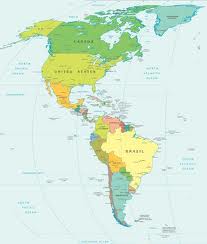
19. Economic Development, Industry and Production by Sector in American Countries, 1980-2010


Production by sector in American Countries: 1980-2010

Economic development and real production per capita, and by sector, for the period 1980-1999 in American countries is analysed in two articles by M.C. Guisan and E.Aguayo, free downloadable at the journal Website:

Education, Industry,Tradeand Development of American Countries in 1980-99
Those articles published in the journal Applied Econometrics and International Development show an estimated average annual increase of real Value-Added per head of 1.20%.

Regarding the period 2000-2010 the average annual increase has been lower, around 0.69%, in a set of 22 American countries.

Regarding production by sector, with data calculated from World Bank Indicators, we find the following diferences, between both periods of time,  in rates of annual increase of real Value-added per head, in a set of 22 American countries:

Agriculture: a light increase, from 0.80% for 1980-1999 to 0.96% for 2000-2010
 Industry and Building: a decrease, from 1.62% for 1980-1999 to -0.71 for 2000-2010
 Services: a light increase, from 1.07% for 1980-1999 to 1.11% for 2000-2010
Total: a decrease, from 1.20% for 1980-1999 to 0.69% for 2000-2010

Importanc of Industry and its effects on Services: We  emphasize that the positive evolution of Services depends, at a great extent, on the positive evolution of industry. Industrial stagnation or decline leads to limitations in the capacity of expansion of services, and to generate negative effects due to strong external trade deficits.

    Although some countries have experienced a positive evolution of industrial production per head, the average of 22 American countries has decreased. Industrial development should be improved in American countries given its positive direct and indirect effects on economic development. 

   Regarding industrail development, among 22 American countries in year 2010. we find, in Dollars at 2000 prices and exchange rates:

1)  First group: the highest values of industrial value-added per head in Industry correspond to the USA, Canada, Trinidad and Tobago, with more than 6000 Dollars of year 2000 per capita.
2) A second group, within 2000 and 3000 Dollars of year 2000 per capita, includes: Argentina, Uruguay and Venezuela.
3) A third group within 1000 and 2000 Dollars  of year 2000 per capita consiste of: Brazil, Chile, Costa Rica and México
4) Between 500 and 1000 Dollars of year 2000 per head: Colombia, Dominican Republic, Ecuador, El Salvador, Jamaica, Panama and Peru.
5) Below 500 Dollars of year 2000 per capita: Bolivia, Guatemala, Honduras, Nicaragua and Paraguay.

This set of 22 countries consists of all American countries with more than one million population in year 2010, but two countries without available data for sectoral value-added at the source of data (World Development Indicators of World Bank on line on 3rd April of 2012).

In the cases of Cuba and Haiti, without available data at the WDI search on 3rd April 2012, we find that, accordingly to other sources, Cuba would be included in the third group, with around 1038 Dollars of industrial real value-added per capita, and Haiti would be included in group 5, below 500 Dollars per capita.

Blog in Spanish on Latin America and International Development:

2011/08/23

18. Impact of Trade Deficit on crisis and drop of Industrial production in the USA and 5 European major countries: France, Germany Italy, Spain and UK

Graph 1. Real Value-Added of Industry per capita in France, Germany, Italy, Spain, the United Kingdom and the United States. Source: Elaborated by Guisan(2011) from OECD statistics.

Graph 2. Trade Balance of EU27 and industrial real value-added of EU5. Source: Elaborated by Guisan(2011) from Eurostat Statistics. Left axis for Extra-EU27 Trade Balance. Right axis for Value-Added of Industry. Source: Elaborated by Guisan(2011) from Eurostat and OECD statistics.

Industrial production in the Europea Union for 2000-2010: The lack of enough european policies of support to industrial production have led to decreasing real Value-Added of industry and increasing trade deficits in the balance of goods of EU27, as it is shown in the graph 2 above.

The impact of wrong policies on industrail development of many European countries has been very strong for the period 2008-2010, and some politicians and citizens are showing concern and disagreement with the EU policies in this regard. Diminution of industrial production implies negative consequences for the European Union such as lower production in other sectors, more unemployment and increse of international debt.

Graph 1 shows the evolution of real Value-Added of industry per capita in the 5 major European Union countries (those with highest levels of Gross Domestic Product and Population) for the period 1985-2010.

European Union problems: The European Union documents usually assumes that "The EU´s external trade policiy contributes to Europe´s competitiveness in foreign markets" and includes declaration as the following one: "The EU has a common trade policy whereby the European Commission negotiates trade agreements and represents the EU´s interest on behalf of its 27 Member States. The European Commission consults Member States through an advisory committee which discusses the full range of trade policy issues affecting the Community including multilateral, bilateral and unilateral instruments". In spite of these declarations many people think that policies for industrial development and less deficit should be addressed.


It is clear that the European public opinion and many leaders do not agree with those trade policies that have led to increase indebtness and diminution of industrial development. Some reactions are active in France and the United Kingdom, and surely in other countries, which may be of interest to recover industrial development and favor a balanced trade of the European Union with extra-UE partners, or at least to diminish the trade deficit.

Trade deficit in EU27: In fact in year 2009 the trade balance was negative in 17 countries, positive in 10, and negative for EU27 as a whole.

Countries with positive trade balance of goods in 2009: Belgium, Czec Rep., Denmark, Finland, Germany, Hungary, Ireland, Netherlands, Slovakia and Sweden.

Countries with negative trade balance of goods in 2009: Austria, Bulgaria, Cyprus, Estonia, France, Greece, Italy, Latvia, Lithuania, Luxembourg, Malta, Portugal, Romania, Slovakia, Spain and the United Kingdom.

The most positive balance in Euros per capita, more than 1000 € in year 2009, corresponded to Belgium (1194), Denmark (1465), Germany (1644), Ireland (8568), Netherlands (2380).

The most negative balance in Euros per capita, less than -1000 € in year 2009, corresponded to Cyprus (-5918), Greece (-2531), Luxembourg (-4940), Malta (-3283), Portugal (-1787), Spain (-1081) and the United Kingdom (-1513).

Crisis and solutions: The European Union should show concern about high deficits in extra-EU trade, particularly if those deficits lead to diminution of industrial production per capita, particular if dismantling EU´s industry is not accompanied by an increase in the International Investment Position or in other variables that can guarantee sustained development. European Economic Policies should be adressed to diminish deficit in extra-EU balance for the EU as a whole and to make sustainable the intra-EU imbalances among countries. Sustainability presents to options: 1) all EU countries would promote industrial development to a degree enough to guarantee real convergence with the most advanced economies. 2) European Unions would guarantee flows of credit from EU countries with superavit to EU countries with deficit, like among different regions of a single country. European Parliamente and Commission may choose a mix of both options, but they should offer to all EU countries opportunities for sustainable development.


Selected newspaper article on industrial problems in EU countries:

Telegraph: Where will Britaint´s manufacturing revival come from?, by Louisa Peacok, 2nd June 2011.

2011/05/13

17 Crisis, Development, Voice of Good Economists in Greece, Portugal and Spain, and comparison with other OECD countries. Euro-American Association Development Report 2011.

Source: Guisan(2011) based on OECD National Accounts Statistics


Greece: beautiful Egina


The graph shows real value-added per capital in industrial sectors. One of the main causes of economic crisis in Greece, Portugal and Spain is their low level of industrial development in comparison with more advanced OECD countries. Countries with low levels of industrial production per head very often experience twin deficits: 1) unbalanced foreign trade, with more imports than exports, and 2) government deficit because, as a result of the low level of industrialization, income from taxes and other sources is below the amount needed to provide satisfactory levels of public services. The attemps to foster production in building and services without a proper development of industry per capita, like it has happened in Spain and other countries for the period 1995-2007, is usually unsustainable and lead to economic crisis as it has happened in Spain for the period 2008-2010.

There are good economists in those countries but unfortuantely policy makers usually do not listen to their good advice. People do not expend too much, but instead most people in those countries work hard and expend little. It is not fair to throw blame on citizens for the causes of the crisis when the main cause is the lack of good economic policies, at national and European Union level, in order to foster industrial development.

Here we will include references to interesting articles and Websites where good economists give useful advice to improve development and avoid economic crises in those countries.


LISTEN TO THE VOICE OF GOOD ECONOMISTS AND GET OUT OF THE CRISIS


Recommended readings about crisis and development in Greece:
"Development is the only solution. Seventeen Proposals for a New Development Stategy", Azariadis, C.(Washington Universitry, MO, USA), Ioannides, Y. (Tufts University,MD,USA), Pissarides, A. (LSE, London UK) (2010).
"Is there a strategy that can free Greece from the grip of today´s unprecedental economic and social crisis and place her on a path of sustainable development and solid prosperity? The signers of this article believe that the answer is yes if the country is willing to go beyond the measures of fiscal austerity and market reform advised by the EU-ECB.IMF "troika". We predict that market reforms will not succeed unles they are supplemented by powerful pro-growth policies. The real choice of Greece is not between solvency and default or between reform and stagnation; it is between prosperity and underdevelopment". See full article

Website on Greek Development: http://greekeconomistsforreform.com/

Recommended readings about the positive impact of manufacturing on development, through intersectoral relationships in Europe, America and other areas:

Guisan, M.C.(2006).”Industry, Foreign Trade and Development: Econometric Models of Europe and North America, 1965-2003International Journal of Applied Econometrics and International Development, Vol.3-1. Article free on line: click on "Download"" at: http://ideas.repec.org/a/eaa/ijaeqs/v3y2006i1_1.html

Guisan, M.C.(2007).”Industry, Foreign Trade and Development: Econometric Models of Africa, Asia and Latin America, 1965-2003” International Journal of Applied Econometrics and International Development, Vol.4-1. Article free on line: click on the Abstrac page and then on "Download"" at the Web site of Journal IJAEQS.http://ideas.repec.org/s/eaa/ijaeqs.html

GUISAN, M.C. and AGUAYO, E. (2007). "Production by Sector in The European Union: Analysis of France, Germany, Italy, Spain, Poland nnd The United Kingdom, 2000-2005". Regional and Sectoral Economic Studies, Volume 7-1. On line at: http://ideas.repec.org/a/eaa/eerese/v7y2007i7_3.html


Other interesting articles at our journals AEID and RSES

2011/02/21

16. Euro-American Association of Economic Development: Comments on poverty, world development and the book by P. Collier "The poverty bottom billion"

Table of Poverty in the World: Source Guisan and Exposito (2010) elaborated from World Bank Indicators. Pubished in journal EEDI/ESID (english version will be announced here).

Interesting book by Paul Collier(2007): "The Bottom Billion: Why the Poorest Countries are Failing and What Can Be Done About It" More information at: Look inside the book at Amazon
The autor: Paul Collier is a distinguish researchers in economic development. Professor of Economics, Oxford University Economics Department and Director of Centre for the Study of African Economies. More information at Oxford University

Links to other comments on the book:How the bottom billion are trapped? By Martin Wolf, Financial Times, May 13 2007.

Terry OBrien "The Bottom Billion: Why the poorest countries are failing and what can be done about it: Some insights for the Pacific?" Australian document.

Our comments on the poverty billion and what can be done:
Accordingly to World Bank data and our estimations, extreme poverty (less than 2 dollars a day per person) has evolved from 46.81% of World popublation in year 2000 to 41.70% in year 2005. It is a huge percentage of people, and surely more effective policies should help to alliviate this problem. We share the aim to help the poor to have opportunities for a better life, and accordingly to the experience of selected international development studies we insist on the convenience to improve education and labor opportunities in those countries.
In Collier’s view some countries have fallen into one or often more of four traps, and resolving their problems will require novel ways of addressing those traps.
Trap 1: Conflict.
Trap 2: Mismanaged dependency on natural resources
Trap 3: Weak quality of governance in small countries
Trap 4. Difficulties for access to large markets (for example lanlocked countries without friendly
neighbours)
Other problems are often present in the poorest countries, such as earthquakes, unhealthy climate, river floods and other ones.
Accordingly to international econometric models and other studies, improvement of the educational level of population is a great advantage to solve many of these problems, having into account that usually education has a positive role to foster peace and cooperation, to improve quality of government, to prevent nature disasters, and to get a better management of natural resources and industrialization.
Some interesting articles in this regard are, among others, the following ones published by our Association in the journal Applied Econometrics and International Development, free available by clicking on "download" at the Abstract page: